
Stranded in an Electric Vehicle in Dallas?
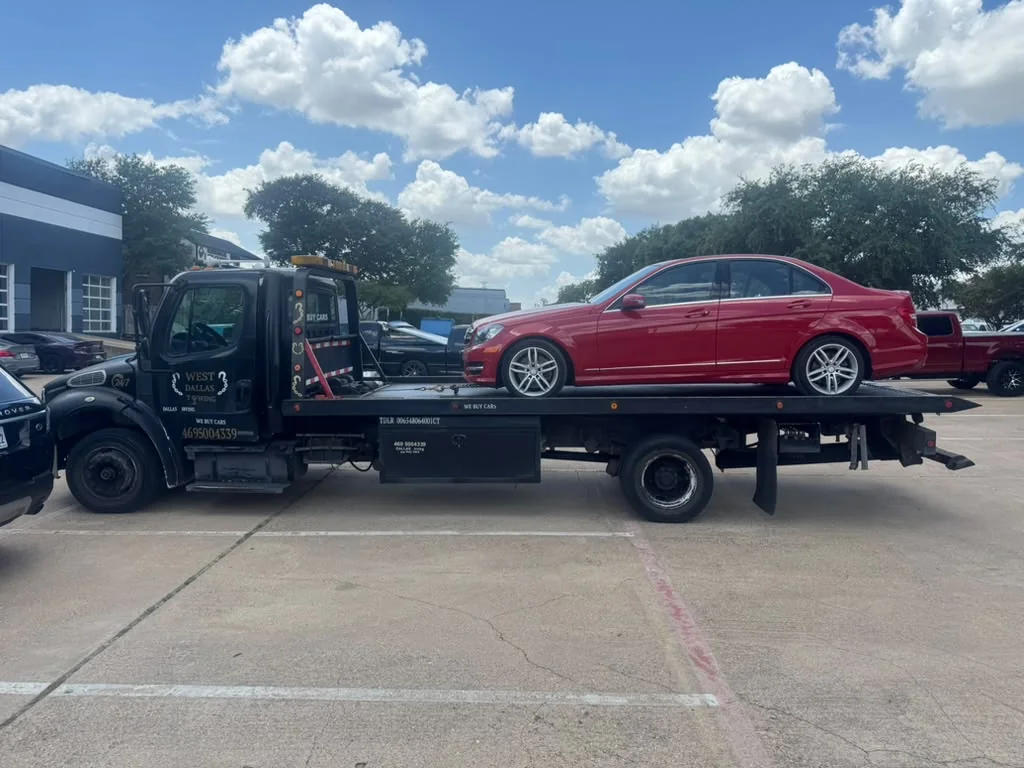
We deploy purpose-built hydraulic flatbeds with soft eight-point tie-downs to protect EV batteries, motors, and warranties.
Your electric car just shut down on the Dallas North Tollway. Maybe the battery hit zero, a warning light popped up, or you were in a fender bender. Your first thought is to call a tow truck. Your second thought should be: will the wrong tow damage my car?
EVs are not towed like gas cars. One wrong hookup can spin the motor and lead to an expensive repair. Below, you will learn how safe EV towing Dallas TX drivers can count on works, what to do while you wait, and what to tell dispatch.
Key Takeaways
- ✓EVs are growing fast in Texas: Registered EVs in Texas, including plug-in hybrids, more than tripled to 456,667 between July 2022 and late 2025.
- ✓Flatbed is the standard: Tesla explicitly instructs drivers and operators to transport its vehicles with all four tires off the ground.
- ✓Most EVs ban flat towing: Tesla, Rivian, Hyundai IONIQ 5, Kia EV6, and Mustang Mach-E all strictly prohibit towing with wheels rolling on the pavement.
- ✓Damaged batteries can reignite: In an NTSB investigation, three of four crash-damaged EV batteries reignited long after the initial fire was suppressed.
- ✓Keep your distance: NHTSA advises storing a severely damaged EV at least 50 feet away from any structure or other vehicles.
- ✓Check your coverage: Automakers like Tesla state they may not reimburse tows that were not dispatched directly through their official roadside channels.
Why EVs Need Special Towing Care
More EVs on Dallas roads means more EV breakdowns. According to TxDOT data, Texas adds approximately 1,500 new electric vehicles to its roads every single week. Many traditional towing companies still treat electric cars just like gasoline vehicles, and that is precisely where disastrous drive unit damage occurs.
Spinning Wheels Can Hurt the Motor
In a conventional gas car, shifting the transmission into Neutral physically disengages the drivetrain, allowing the drive wheels to roll freely. In the vast majority of EVs, however, the wheels remain permanently coupled directly to permanent-magnet synchronous electric motors. When those wheels spin while rolling during an unauthorized tow:
- The motor acts as a generator: Spinning drive units generate electrical current that can cause severe overheating.
- Backfed electricity: Uncontrolled electrical current feeds back into inverters and sensitive high-voltage components that are powered down.
- Mechanical friction and wear: Internal reduction gears, precision bearings, and electric drive units suffer accelerated wear or complete mechanical seizure.
- All-Wheel Drive vulnerability: Dual-motor and tri-motor AWD models (like dual-motor Tesla Model 3/Y or Rivian R1T) carry active motors on both axles, making traditional two-wheel towing catastrophic.
Flatbed vs. Other Towing Methods for EVs
Not all tow trucks utilize identical transport engineering. The comparison matrix below outlines which towing methods are approved for electric vehicles:
| Towing Method | How It Works | Safe for Most EVs? | Operational Notes |
|---|---|---|---|
| Flatbed (Rollback) | The entire vehicle rests on an inclined platform | Yes — Safest Option | Mandated by Tesla, Rivian, Hyundai, Kia, Porsche, and Lucid |
| Wheel-Lift with Dollies | Two wheels lifted by boom, remaining two ride on rolling dolly trays | Sometimes | Acceptable only if manufacturer specifically approves auxiliary dolly use |
| Wheel-Lift (Two Down) | Front or rear axle lifted; trailing tires roll on the road | No — High Risk | Spins drive motors on pavement; can destroy inverter and gearing |
| Flat Towing (All Down) | Vehicle pulled behind another truck with all four tires rolling | No — Prohibited | Strictly banned in EV owner manuals; immediate risk of severe motor burn-up |
A true flatbed rollback ensures all four tires remain completely stationary throughout the entire journey, which protects the high-voltage battery casing, suspension geometry, and drive units. To understand broader towing mechanics, review our guide to flatbed vs. regular towing.
What to Do When Your EV Breaks Down in Dallas
When your dashboard throws a critical high-voltage isolation fault or the battery range hits 0% on a major corridor like I-35E, I-635 (LBJ Freeway), or the Dallas North Tollway, stay calm and prioritize roadside safety:
- Activate hazard warning flashers immediately: Alert high-speed traffic behind you before your forward momentum drops.
- Steer to the right shoulder or exit ramp: While the car retains residual kinetic power, gently guide it onto a wide emergency shoulder or adjacent parking lot.
- Remain safely buckled inside on live highways: Never step out of the car onto active lanes. For proven highway survival protocols, read our guide on how to stay safe while waiting for a tow truck.
- Pinpoint your exact location: Note the nearest highway mile marker, exit sign, cross street, or notable commercial landmark.
- Call dispatch and state clearly that you drive an EV: Explicitly inform the operator that your vehicle is an electric car requiring a flatbed rollback.
How to Turn On Tow Mode
Electric vehicles are equipped with electronic parking brakes that automatically lock when the drive computer shuts down. Tow Mode releases this mechanical brake lock so a winch cable can pull your car smoothly onto a flatbed without dragging rubber across asphalt.
Entering Transport / Tow Mode
Press and hold the brake pedal. On the main touchscreen, tap Controls > Service > Towing. Press and hold Enter Transport Mode until the button turns blue and the vehicle confirms the parking brake is released.
Ford, Hyundai, Kia, Rivian
Ford Mustang Mach-E, Rivian R1T/R1S, Hyundai IONIQ 5, and Kia EV6 use settings titled “Emergency Tow Mode” or “Transport Mode” within the vehicle settings screen. If your screen is unresponsive, our experienced operators will guide you through manual emergency release procedures.
🔋 What If Your 12-Volt Auxiliary Battery Is Completely Dead?
Electric cars rely on a traditional 12V or 16V low-voltage auxiliary battery to power the touchscreens, door locks, hazard lights, and contactors for the electronic parking brake. If this auxiliary battery loses charge, the vehicle cannot shift into Tow Mode or unlock its charge port. Tell our dispatchers in advance — our trucks carry dedicated jump-starter packs and external power jump leads to energize the low-voltage terminal and release the parking brake before loading.
What If Your EV Was in a Crash?
A collision alters towing protocols drastically. Even if the outer body panels appear only moderately scratched, the high-voltage lithium-ion battery pack situated along the floorpan could have suffered internal cell crushing or structural puncture.
“Damaged high-voltage lithium-ion cells can retain trapped energy with no internal path to discharge, creating latent thermal runaway and secondary reignition hazards.”
If your electric vehicle is involved in a collision across Dallas, follow these vital safety measures:
- Evacuate immediately if you notice smoke or hissing: Move all passengers at least 100 feet upwind from the car if you observe smoke, vapor venting, acrid odors, or popping noises.
- Alert 911 and your tow operator that the vehicle is an EV: First responders and recovery crews must prepare thermal imaging cameras and excessive water volume if battery cells are breached.
- Never touch compromised battery housing: Do not reach underneath the rocker panels or touch exposed bright orange high-voltage cables.
- Enforce outdoor storage staging: The National Highway Traffic Safety Administration (NHTSA) advises vehicle storage yards to stage crash-damaged EVs in an open-air outdoor quarantine area at least 50 feet away from combustible structures and other parked vehicles.
For complete step-by-step assistance with collisions, read our detailed guide on accident recovery in Dallas TX.
What to Tell the Tow Dispatcher
Giving precise details during your initial dispatch phone call guarantees the operator arrives with the exact equipment required for your make and model. Be prepared to share:
How Much Does EV Towing Cost in Dallas?
EV towing rates in the Dallas-Fort Worth metroplex typically range from $95 to $160 for local flatbed transport, depending on mileage, time of day, and location difficulty (such as low-clearance parking garages). Because electric cars are heavier and strictly require flatbed rollbacks with soft-strap tie-downs, rates are slightly higher than simple wheel-lift gas car towing.
At West Dallas Towing, we maintain 100% price transparency with flat upfront rate quotes before our truck is dispatched. For an in-depth breakdown of regional towing fee caps and mileage pricing, check our guide on how much towing costs in Dallas.
Why Dallas EV Drivers Call West Dallas Towing
Electric vehicle owners require a towing service that understands modern high-voltage engineering. Here is why drivers throughout Dallas, Irving, and DFW trust us:
- Zero ground contact flatbed transport: We load electric vehicles completely flat onto our hydraulic decks, securing wheels with non-abrasive soft straps through the tires — never hooking metal chains onto suspension components or battery frames.
- 24/7 immediate local dispatch: When you call (469) 500-4339, you speak directly with our local Texas dispatch team — no lengthy automated phone trees.
- ~15-minute rapid response: Our fleet is positioned across West Dallas, Downtown, Irving, and Carrollton to reach you before exposure becomes dangerous.
- Fully licensed & insured: We operate under full Texas Department of Licensing and Regulation (TDLR) licensing with comprehensive commercial cargo insurance.
- 5.0-Star Google Rating: Backed by hundreds of verified 5-star customer reviews across North Texas.
Frequently Asked Questions
Clear answers to the most common questions about electric vehicle towing across North Texas.
Final Thoughts: Protect Your EV With the Right Tow
Your electric vehicle represents cutting-edge engineering and a substantial investment. An untrained tow operator or improper towing method can quickly transform a minor battery depletion or flat tire into thousands of dollars in mechanical drive damage. The safest decision is always straightforward: call a professional team that operates flatbed rollbacks and respects EV manufacturer specifications.
West Dallas Towing delivers 24/7 flatbed roadside response across Dallas, Irving, Carrollton, and the entire DFW Metroplex. All four wheels off the ground, every time.