
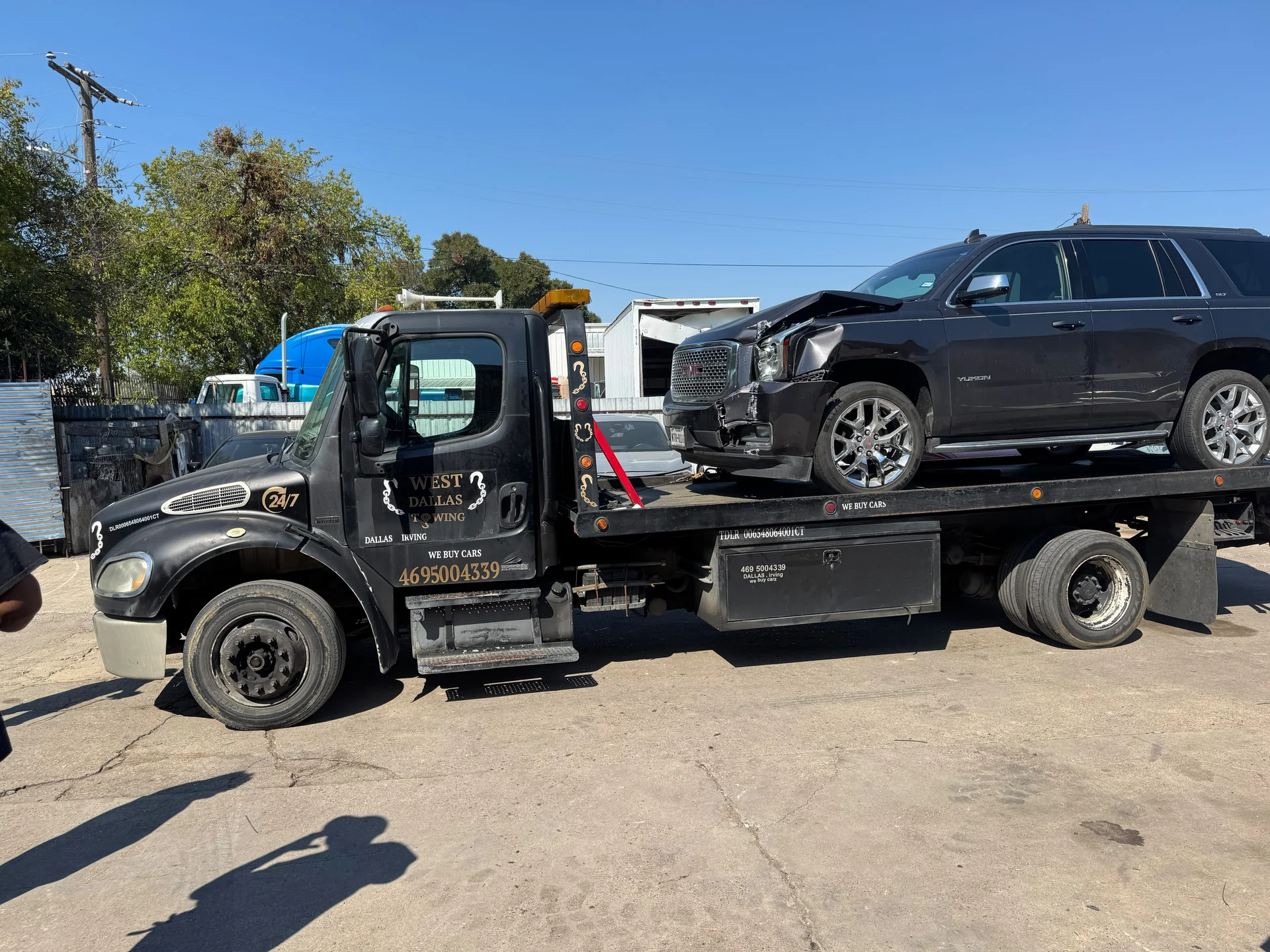
Involved in an Accident in Dallas or DFW?
Our heavy-duty flatbeds and winching units clear crash scenes safely with an average 15-minute response time.
One second you are driving down I-35E. Next, you hear a metal crunch and your car is sitting sideways across a lane. Your heart is racing, and you have a dozen questions. Is everyone okay? Who moves the car? Where does it go?
Knowing what comes next takes a lot of the fear out of the moment. Below, you will learn how accident recovery Dallas TX crews handle a crash scene, what your legal rights are, and how to protect your car and your insurance claim.
Key Takeaways
- ✓Crashes are common in Texas: In 2025, a reportable crash happened every 59 seconds, and 244,534 people were injured.
- ✓Move it if you can: On metro freeways, Texas law says drivers must move a crashed car that can still be driven safely to a safe nearby spot.
- ✓Police reports have a threshold: Officers file a CR-3 report for crashes involving injury, death, or at least $1,000 in apparent damage.
- ✓Tow tickets are required: For non-consent tows, the ticket must show the company's licensed name, phone, and TDLR license numbers.
- ✓Storage yards must report: Texas storage facilities must notify police within two hours of accepting a towed vehicle.
- ✓You have payment options: Storage facilities cannot demand cash only. Credit cards and other electronic methods must be accepted.
Accident Recovery vs. Standard Towing
Many people think a tow is just a tow. After a collision, though, the job is fundamentally different. Recovery means safely stabilizing, winching, uprighting, and extricating a damaged car back into a towable position first, before hauling it away.
| Factor | Standard Towing | Accident Recovery |
|---|---|---|
| Vehicle condition | Upright, rolls normally | Crushed, stuck, flipped, or in a ditch |
| Equipment | Flatbed or wheel-lift | Winches, flatbeds, skates, sometimes multiple trucks |
| Scene work | Hook up and go | Debris, glass, and hazardous fluid cleanup |
| Who calls | Usually the driver | The driver or investigating police officer |
| Time on scene | Often 15 to 30 minutes | Can take an hour or more |
| Cost | Lower, mostly hook fee + mileage | Higher, based on labor, winching, and scene cleanup |
A car with a snapped axle, broken suspension, or leaking radiator should never be dragged on its tires. That is where careful recovery protects your frame and drivetrain from compounding thousands of dollars in extra damage.
What Happens at the Scene
Every collision scene is dynamic, but professional recoveries in Dallas follow a structured safety protocol.
1. Safety and Medical Checks Come First
Before anyone worries about sheet metal, assess personal physical safety and secure the immediate area:
- Call 911 immediately if anyone is injured, trapped, or visibly confused.
- Activate your emergency hazard flashers right away.
- Stay securely seatbelted inside your car if you are stuck in a live highway lane and cannot move safely.
- Never stand between crashed vehicles or close to high-speed moving traffic.
- Watch for electrical smoke, fuel vapor, or dripping fluids, and step well away if you detect fire hazards.
Medical tip: Adrenaline heavily masks physical pain following a collision. Whiplash, lumbar injury, or concussions often surface 12 to 48 hours later. Always get evaluated by a medical professional even if you initially feel fine.
2. Police Report and Clearing the Road
Crashes are an hourly reality across North Texas. According to TxDOT crash records, Texas logged one reportable collision every 59 seconds in 2025. Under Texas Transportation Code § 550.022, if a collision occurs on a controlled-access freeway and no one suffers severe injuries, drivers must safely move operable vehicles onto the frontage road or adjacent shoulder.
Moving fender benders “reduces the number of secondary crashes.”
If the vehicle is disabled or inoperable, leave it where it came to rest. Turn on hazard lights, stay back, and let Dallas Police and our recovery operators clear the roadway safely.
3. The Recovery Work Begins
Once first responders stabilize the scene, our recovery operator assesses vehicular structural damage to select the cleanest extraction technique:
- Winching the car carefully out of concrete medians, guardrails, or embankment ditches.
- Employing heavy-duty wheel skates or dollies when wheels are locked, sheared, or bent.
- Loading the vehicle completely flat onto our hydraulic tilt flatbed bed to prevent ground scraping.
- Sweeping shattered tempered glass and jagged body fragments off active lanes.
- Applying EPA-approved granular absorbent over hazardous engine oil, transmission fluid, or coolant spills.
4. Transport to a Shop, Home, or Storage Facility
After loading, your vehicle travels to the destination of your choice on a consent tow. Most drivers direct the truck to their preferred collision body shop, brand dealership, or private home. If you haven't selected a repair shop yet, your car can be kept safely at a licensed vehicle storage facility (VSF) until your insurance adjuster completes their inspection.
Can You Choose Your Own Tow Company in Dallas?
In many circumstances, yes. Your ability to pick depends on whether the tow is classified as a consent tow or a non-consent tow:
You Make the Call
You contact your preferred towing provider directly. You control which company arrives, approve the rate, and dictate where your car is delivered.
Police-Ordered Tow
Law enforcement orders the tow if a vehicle actively obstructs major lanes or the driver is incapacitated. An on-rotation wrecker is called to clear the hazard.
Even when a police rotation tow is initiated, Texas state law vigorously protects consumers. You can review your explicit consumer protections on the TDLR towing rights portal, which governs maximum fee caps and complaints.
“The vehicle storage facilities are required to tarp and protect the vehicle.”
How to Protect Yourself and Your Claim
The decisive actions you take in the first 60 minutes after a crash prevent costly insurance friction down the road:
- Capture wide and tight photos: Photograph the entire crash intersection, skid marks, traffic signals, and close-up angles of all vehicle damage.
- Document all parties: Take clear photos of other vehicles' license plates, insurance ID cards, and driver's licenses.
- Obtain the police report number: Request the responding officer's name, badge number, and incident report/CAD tracking number.
- Secure personal belongings: Remove wallets, laptops, garage door openers, dashcam SD cards, and vehicle registration paperwork before the car is loaded.
- Get written destination confirmation: Obtain the exact street address of the storage lot or repair shop where your vehicle is being taken.
📋 What to Check on Your Tow Ticket
Texas law mandates that tow tickets contain specific disclosures. Before signing, verify:
- The towing company's full legal business name and 24/7 telephone number.
- Both the company TDLR certificate number and individual driver license number.
- An itemized breakdown of each service fee (hook fee, winching, cleanup, mileage).
- The registered name and physical street address of the storage facility.
Warning: Never sign a blank tow ticket or an invoice with unitemized lump sums.
How Much Does Accident Recovery Cost in Dallas?
Accident recovery carries a higher rate than standard breakdown towing due to the specialized rigging, winching cables, extended scene time, and hazard cleanup required. Pricing is determined by collision severity, ditch depth, vehicle weight, and transit mileage.
In almost all collision cases, towing and storage charges are covered under the at-fault driver's liability policy or your own collision/comprehensive coverage. Contact your insurer to clarify documentation requirements. For detailed price guidelines across North Texas, consult our Dallas towing costs guide.
Why Dallas Drivers Trust West Dallas Towing
A collision is stressful enough without dealing with predatory tow operators. When you call West Dallas Towing for emergency accident recovery across Dallas and Irving, you receive:
Read more about when flatbed towing is essential for collision vehicles, or discover what to check when selecting a reliable towing company in Dallas.
Final Thoughts: Get the Right Help After a Crash
A car crash turns an ordinary day upside down. The right recovery team protects your personal safety, shields your car from secondary damage, and gives you transparent answers when you need them most.
West Dallas Towing serves Dallas, Irving, and the entire DFW Metroplex 24 hours a day. When you need accident recovery Dallas TX drivers can depend on, one call puts a certified recovery crew en route.